Free, beginner-friendly nutrition education
Nutrition Made Easier to Understand
Nutrition Crash Course breaks down calories, protein, carbohydrates, fats, fibre, vitamins, minerals, food labels and other nutrition topics into straightforward lessons, articles and tools.
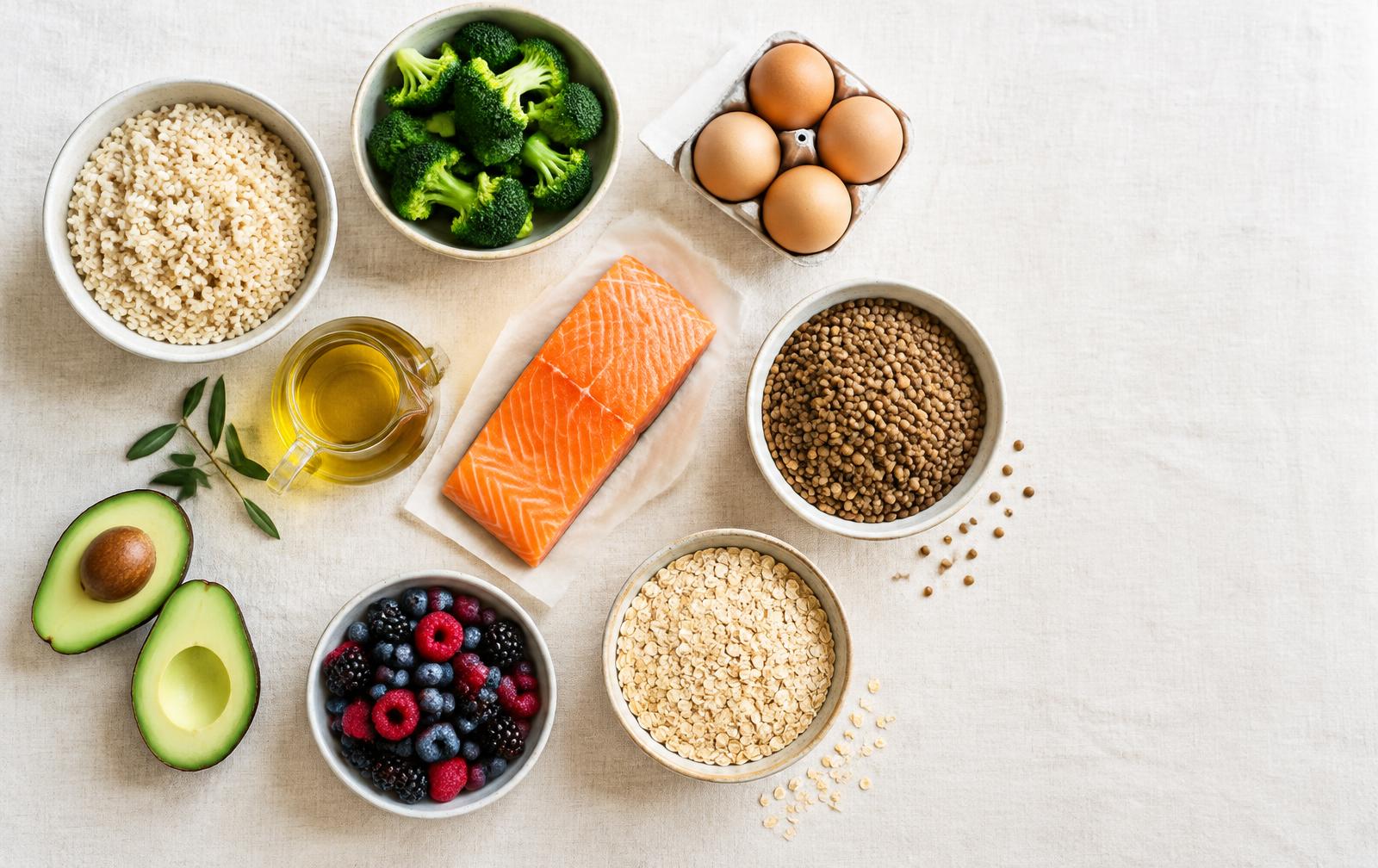
The free beginner course
Seven short beginner lessons, from nutrients to food labels.
7 lessons available now
Lesson 1 · Ready now
Nutrition Basics
What nutrition is, the main nutrients, and why variety matters.
Lesson 2 · Ready now
Calories & Energy
kcal vs kJ, energy per gram, and reading energy on labels.
Lesson 3 · Ready now
Protein
Amino acids, what protein does, food sources and reading protein on labels.
Lesson 4 · Ready now
Carbohydrates
Sugars, starches and how carbohydrates fit in a diet.
Lesson 5 · Ready now
Dietary Fats
Types of fat and how they appear in foods.
Lesson 6 · Ready now
Fibre, Vitamins & Minerals
The micronutrients and fibre explained.
Lesson 7 · Ready now
Understanding Food Labels
Reading nutrition panels across different countries.
Free nutrition calculators
Explore topics
Keep learning
Everyday nutrition guides
Standalone, source-linked answers to common questions.
Protein
Highest Protein Foods: Protein per 100g Compared
The highest protein foods compared per 100g using USDA data, with cooked and dry foods kept separate and raw vs cooked weight explained.
Meals
High-Protein Meals: Easy Breakfast, Lunch & Dinner Ideas
Easy high-protein meals with ingredients, method and protein per serving calculated from USDA data, plus breakfast, lunch and dinner collections.
Grains
Whole Grains vs Refined Grains: What’s the Difference?
Understand the grain’s three parts, compare whole and refined grains, and make sense of ingredients and everyday swaps.
Caffeine
What Does Caffeine Do to Your Body?
Understand alertness, sleep, caffeine amounts in drinks and population safety guidance without confusing stimulation with energy.
Cooking
Raw vs Cooked Vegetables: How Cooking Changes Nutrients
Neither raw nor cooked is always healthier. See how steaming, boiling, microwaving and roasting change vitamins, carotenoids and food safety.
Fats
Trans Fats Examples: Foods That Can Contain Trans Fat
Examples of foods that can contain trans fat, industrial vs natural sources, how to spot it on UK, EU and US labels, and what regulators now allow.
Drinks
Juicing Benefits: What Juice Can (and Can’t) Do
The real benefits of juicing—vitamins, convenience and variety—plus what juicing removes, sugar and teeth, NHS 150ml guidance and juicing vs blending.
Foods
What Are Some Nutrient-Dense Foods?
Examples of nutrient-dense foods across food groups, what nutrient density means, affordable choices and simple meal ideas—without arbitrary superfood rankings.
Labels
How to Read Nutrition Labels: A Beginner’s Guide
Learn to read nutrition labels step by step: per 100g vs per serving, sugar, fat and salt, UK traffic lights and US Nutrition Facts, with a printable checklist.
Protein
Low-Calorie High-Protein Foods: Protein per 100 kcal
Foods that give the most protein for their calories, compared per 100 kcal and per 100g using USDA data, with plant and animal options.
Fibre
Soluble Fibre Foods: Everyday Examples
Soluble fibre (fiber) foods such as oats, barley, beans, lentils, apples and citrus, with USDA total fibre values, soluble vs insoluble explained and easy ways to eat more.
Meals
High-Protein Breakfast Meal Prep: 4 Make-Ahead Recipes
Four high-protein breakfast meal prep recipes with servings, protein per serving from USDA data, and fridge, freezer and reheating guidance.
Meals
High-Protein Lunch Ideas: Easy, Work-Friendly & Meal Prep
Easy high-protein lunch ideas for work: hot and cold, no-cook and meal-prep options with protein per serving calculated from USDA data.
Meals
High-Protein Dinner Ideas: 5 Easy Recipes
High-protein dinner recipes with ingredients, method and protein per serving from USDA data: chicken, salmon, chilli, prawns and cod.
Energy
How to Calculate Macros for Weight Loss: A Worked Example
Calculate calories and macros for weight loss by hand: Mifflin-St Jeor resting energy, activity level, a modest deficit, then protein, fat and carbs, with a full worked example.